progress in the dome

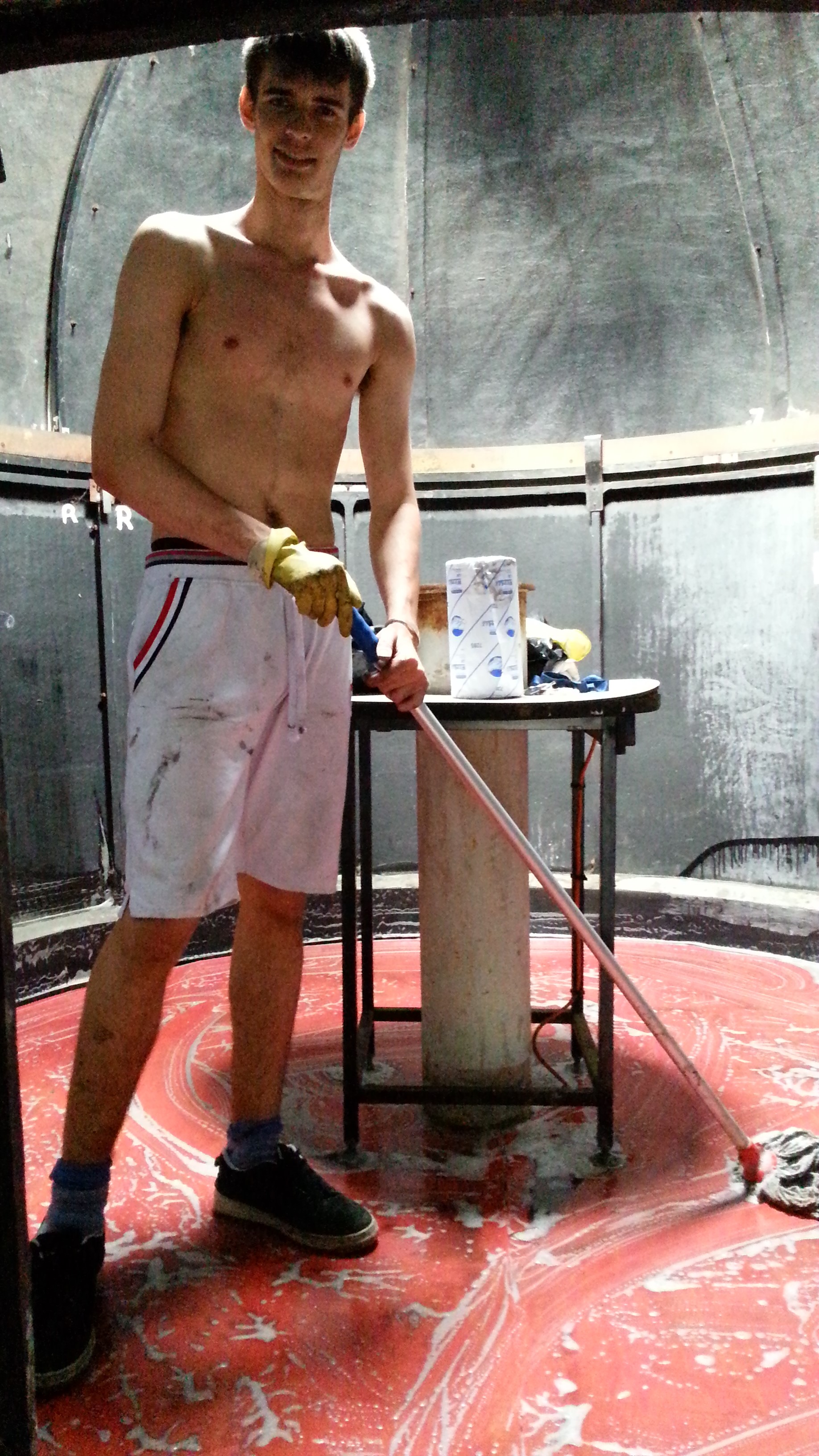
So sorry for the massive delay.  We are now finally starting to make some progress in the dome.  This is basically because I’ve got a student helper called Edo from Milan who is one of our best undergraduates and as you can see he likes getting his top off.  This wasn’t part of the job description (i.e. cleaning.  Stripping wasn’t either.) but it was taking a while to get anyone else to do it and he said “let me at it!”.

edo mopping

Anyway, he’s really working wonders inside the dome, which was very dirty.  My head of department said I wasn’t allowed to clean it myself, that’s my excuse anyway 🙂

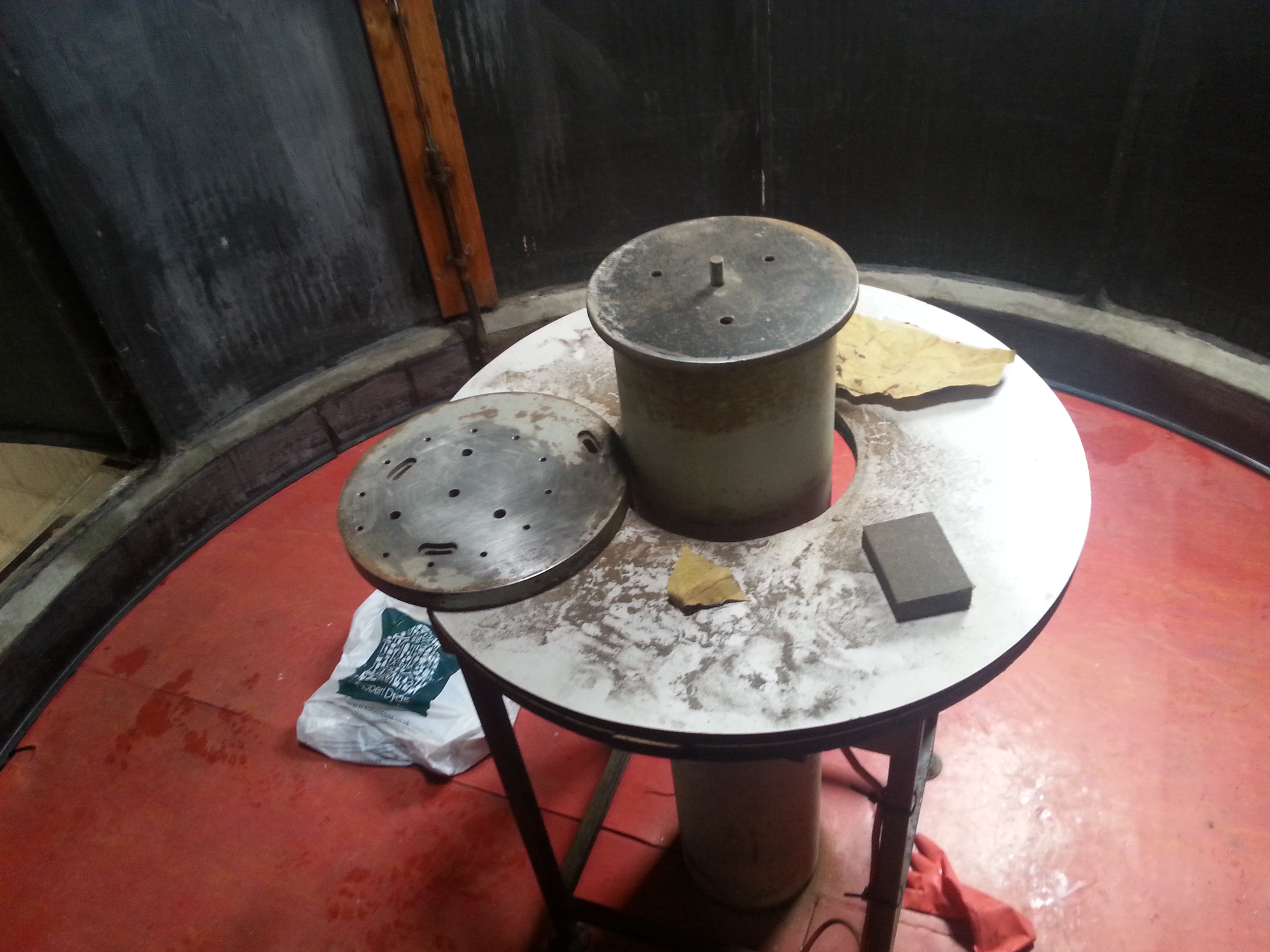
It’s more than a decade of London crud which has blown in through the open hatch.  The central column was also not the kind of thing you’d want to mount anything expensive to

20140604_130701

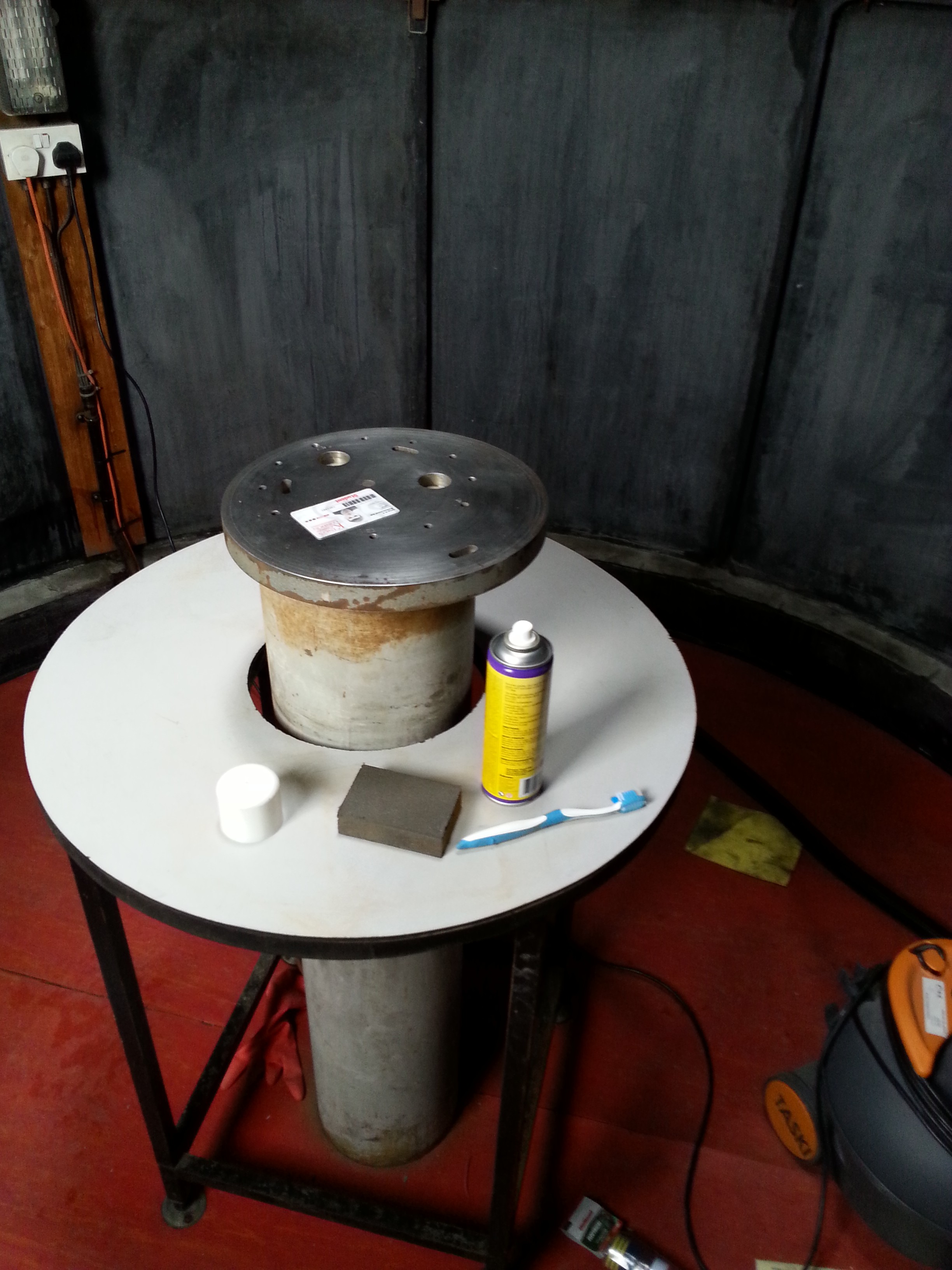
but now it’s looking a lot better!

20140604_135530

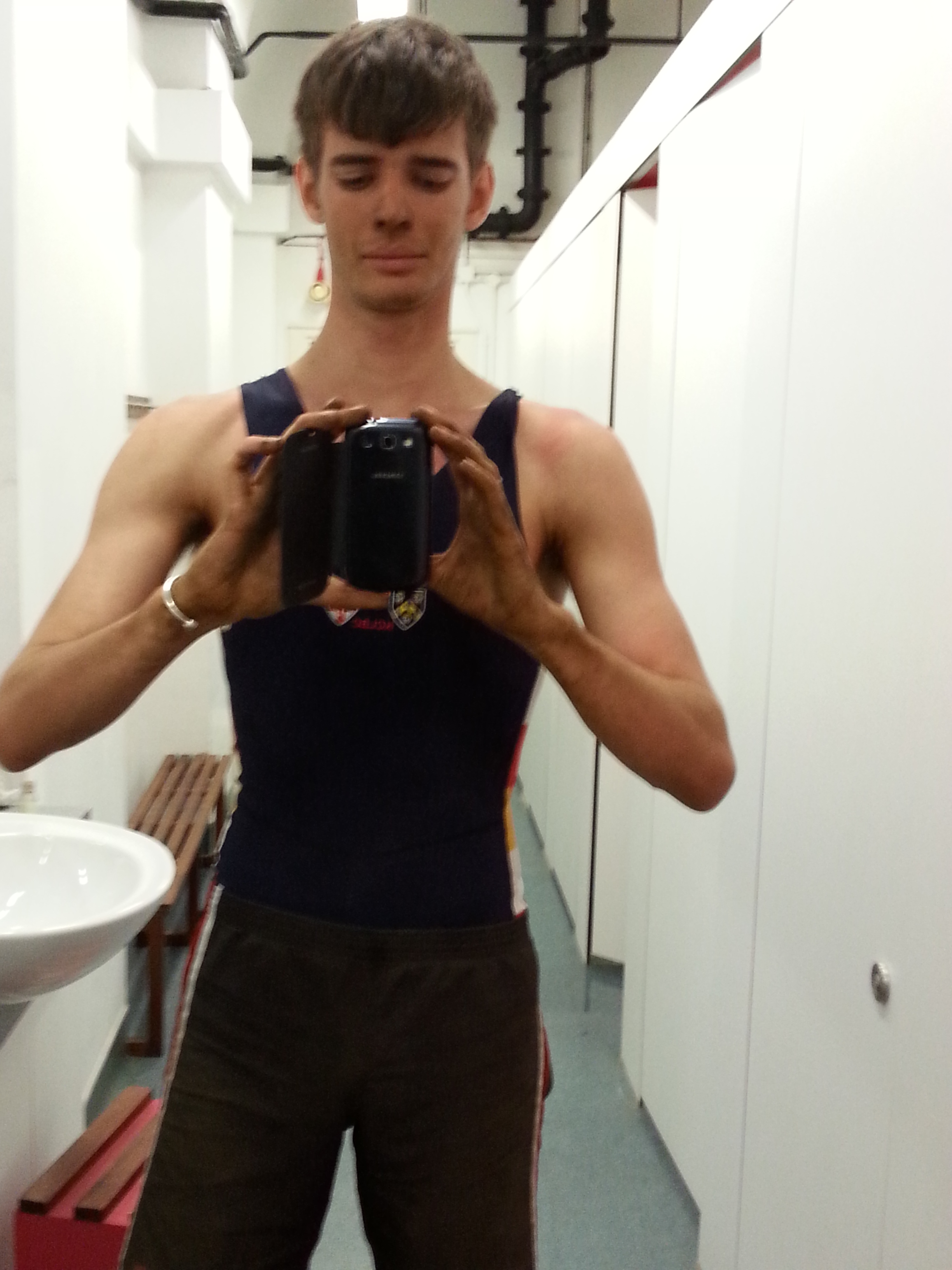
but the dirt has moved from the telescope to Edo.

20140604_181202

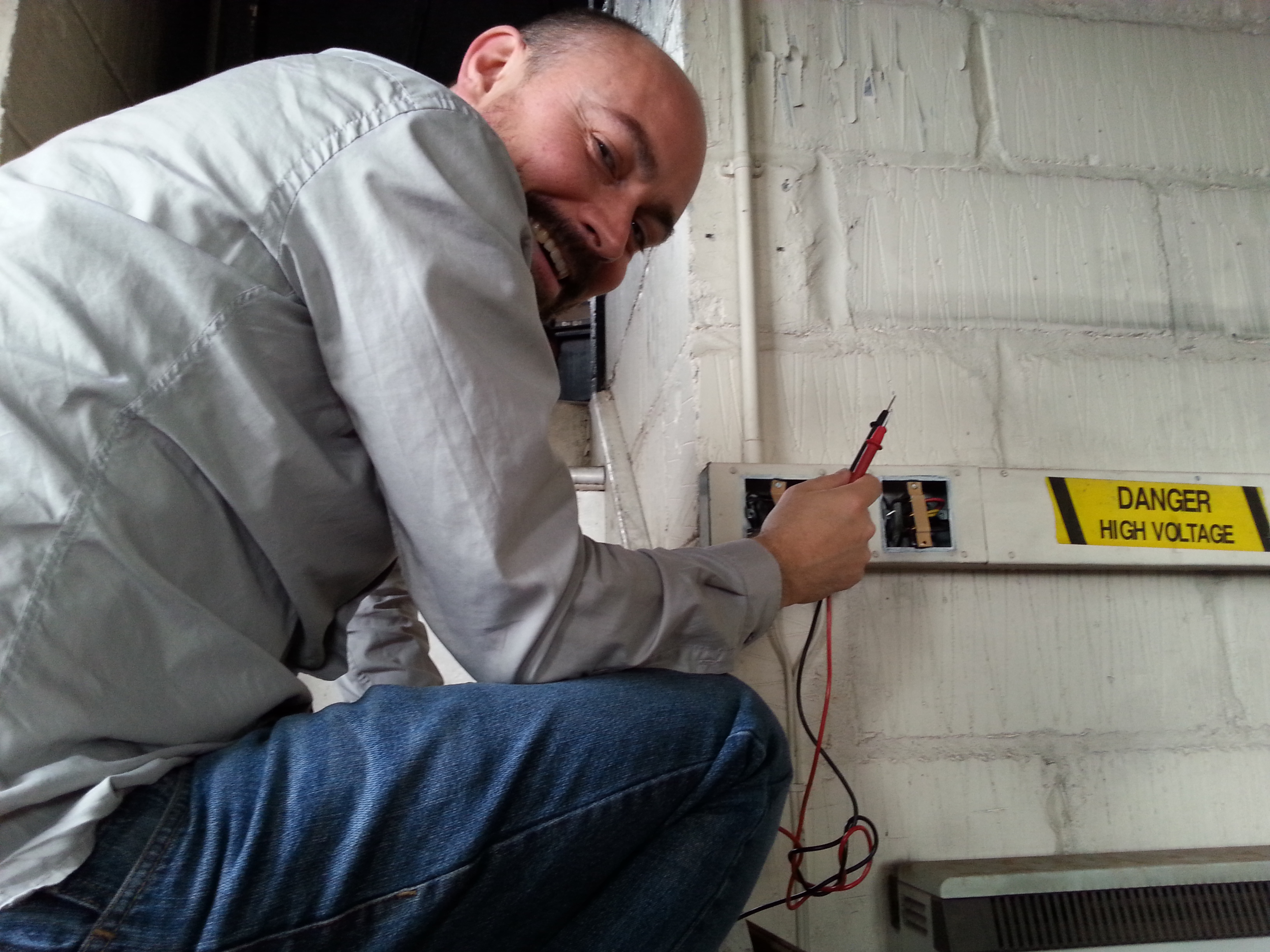
We are also making progress working out the electrics and think we might be able to get the lights working inside the dome.


20140604_111151

but the hut outside the dome does not yet resemble a scientific laboratory

20140603_184941

“HI! YEAH! CAN YOU SEND ME MORE STUDENTS PLEASE!”

20140604_150450


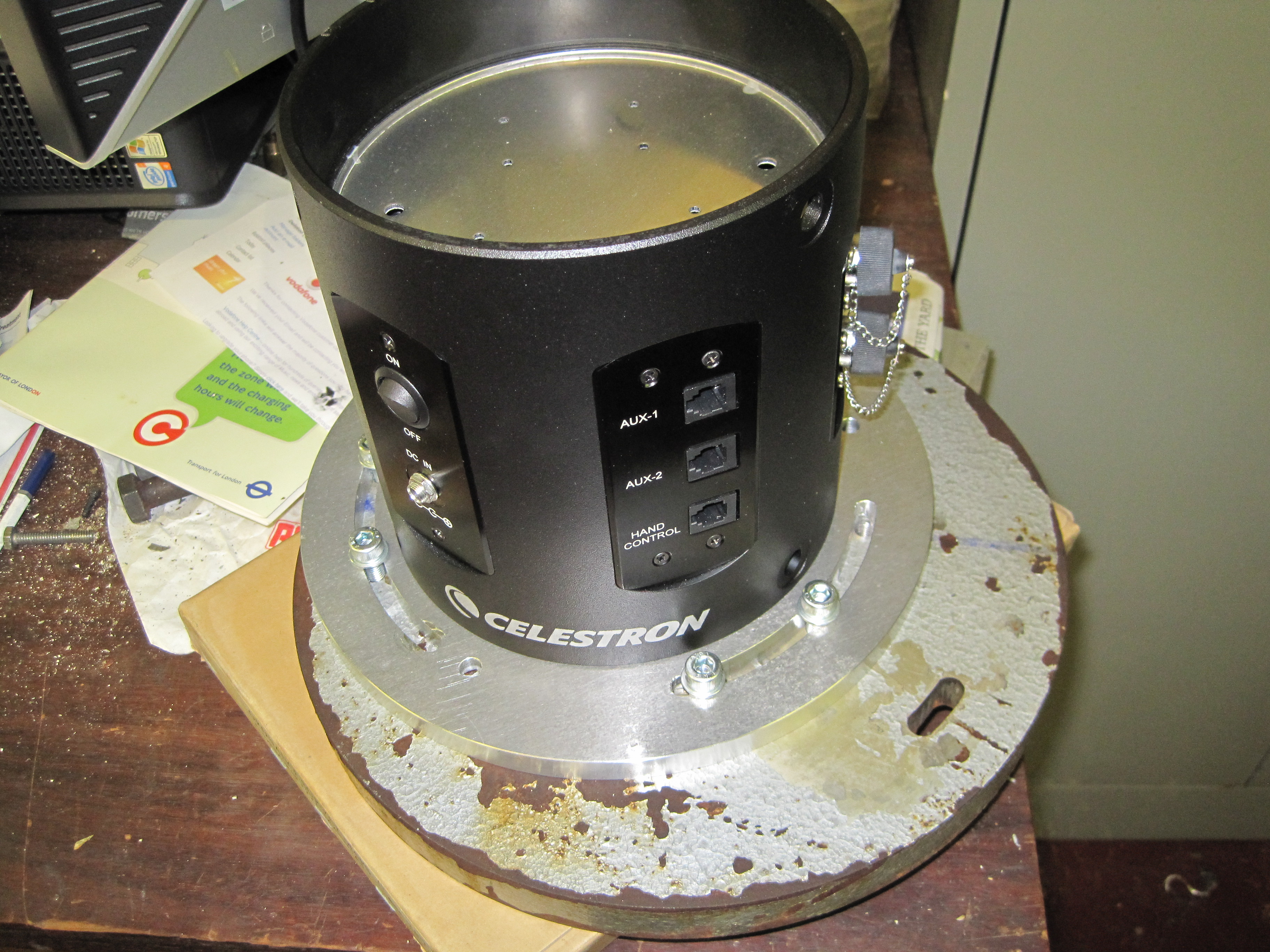
Plate to fix telescope to column

Hi,

Sorry for the delay in posting, I can’t remember feeling as busy as I have been over the past few weeks for some time.  The BICEP result took us all by surprise, so we put out a paper on the subject. Then we also finished another paper about inflation.  In the mean time Paul in the old engineering workshop was building me this

Image

which is the metal base I need to connect the telescope to the existing column in the dome.  So we couldn’t decide which precise orientation it had to be and the intructions from Celestron were very vague.  Because of this, he set it up so that we could orient the base plate anyway we need to and then attach the telescope base to it.

This is a picture of Paul

Image

next to his creation.  Paul has been working at King’s College London for 47 years, that’s a long time:-

Anyway, I’ve been crazy busy running around and Paul did all the thinking for me.  Basically the part he has constructed will work WHATEVER orientation we require, what bolts we need to use etc.  So that’s really great.  Here’s another photo which might be clearer:-

Image

So now I have no excuse, I’m going to have to go out there with the vacuum cleaner and clean the thing up.  When I can get the Dome moving again we then stick the telescope in there.  We still only have the telescope, so don’t hold your breath for actual JPEGs from space, not this month anyway…

Holy Mackerel its Tensor modes!!!

So today we saw announcement of the possible detection of tensor modes in the Cosmic Microwave Background radiation (CMB).

bicep

This is extremely significant as it gives us information which appears to be from closer to the big bang (time=zero, whatever you want to call it.  The bit we don’t understand.  I’m going to call it time zero) than anything else that has ever been observed.

So some background as to how this fits into our best guess of what is going on in the Early Universe – we think that at some very early time, some tiny fraction of a second after time zero the Universe expanded extremely rapidly during a period of Cosmological inflation.  Now there are many theories of inflation, the simplest ones happen over a period of about 10^-34 seconds but you could probably cook one up which took as long as 0.1 seconds if you were being really crazy and pushing everything to its limits.

What determines the timescale over which this happens depends upon the energy density during inflation, and you can’t tell what that is from the normal ripples in the CMB which give rise to galaxies etc.  However the energy density during inflation DOES lead to gravitational waves in the early Universe which affect the polarization of these microwave photons.  The new results from the BICEP 2 experiment shows that they can see this effect, or at least they seem to be able to see these gravitational wave effects, or tensor modes, or B-modes.

This is a bit strange because the Planck Satellite kind of ruled this out last April, so we need to think about this a bit more.  That might be telling us something about which models of inflation are OK and whether inflation itself really is a good match to the data.

Also, it could be inflation, or it could be something else, time will tell… but it’s very very significant and it is the beginning of a whole new story…

Taken at face value it tells us that we are seeing imprints of the very early stage of the Universe on the CMB, and that we have started to see signals from an epoch when the energy density was closer to the Planck scale than many of us, including myself, ever hoped to see.

telescope… but no electricity (v.short update)

So after the initial excitement of the telescope arriving, I’ve just had a hand from Bill Luckhurst, David Parker and Julian Greenberg to remove the old telescope from its mount inside the dome.  Unfortunately no photos because the mains electricity has crashed.  Since the telescope is animated through the medium of electricity, this is a problem…

Julian says he’s going to report it and we’ll see what happens.

We have a telescope!

IMG_0509

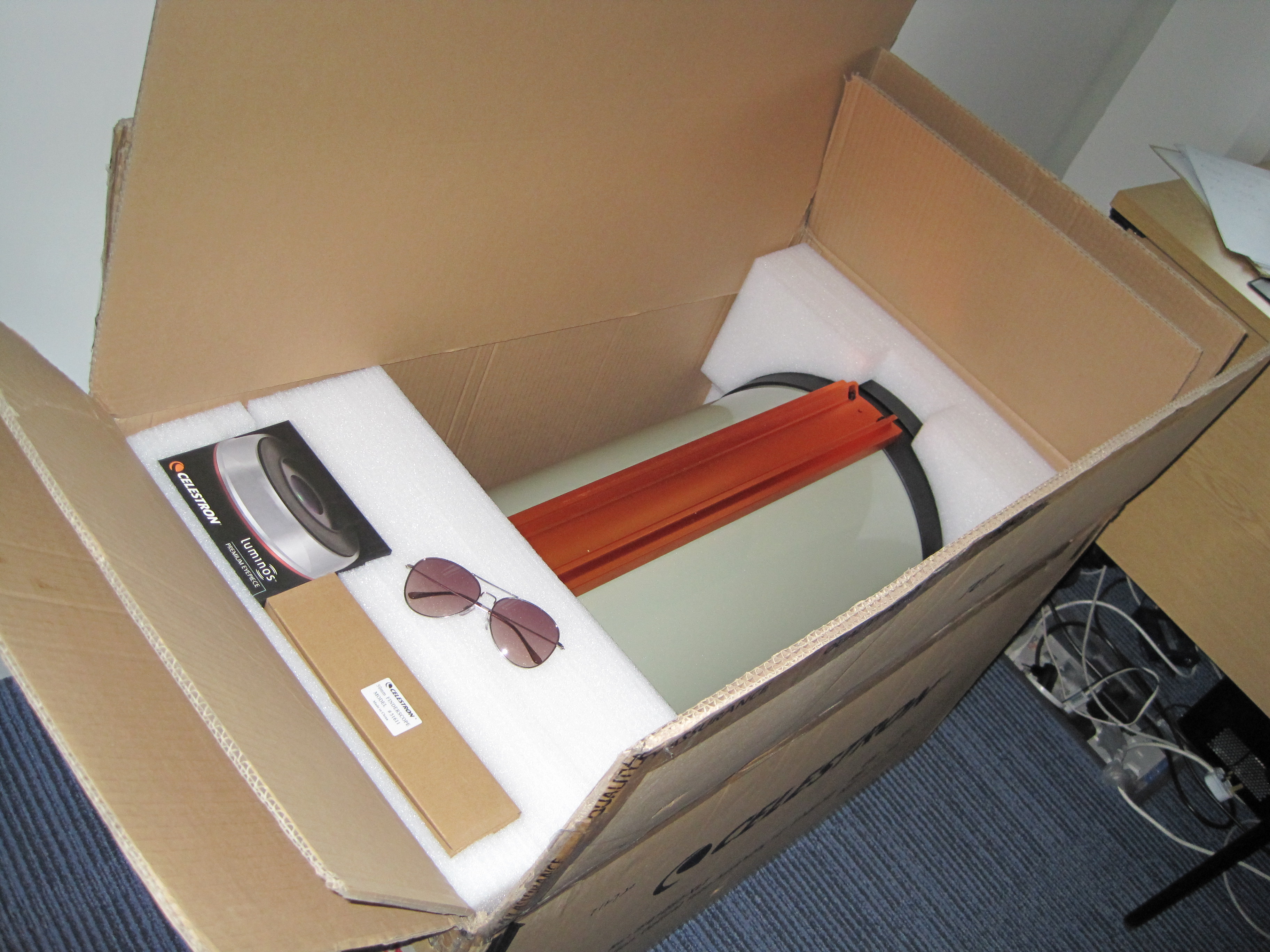
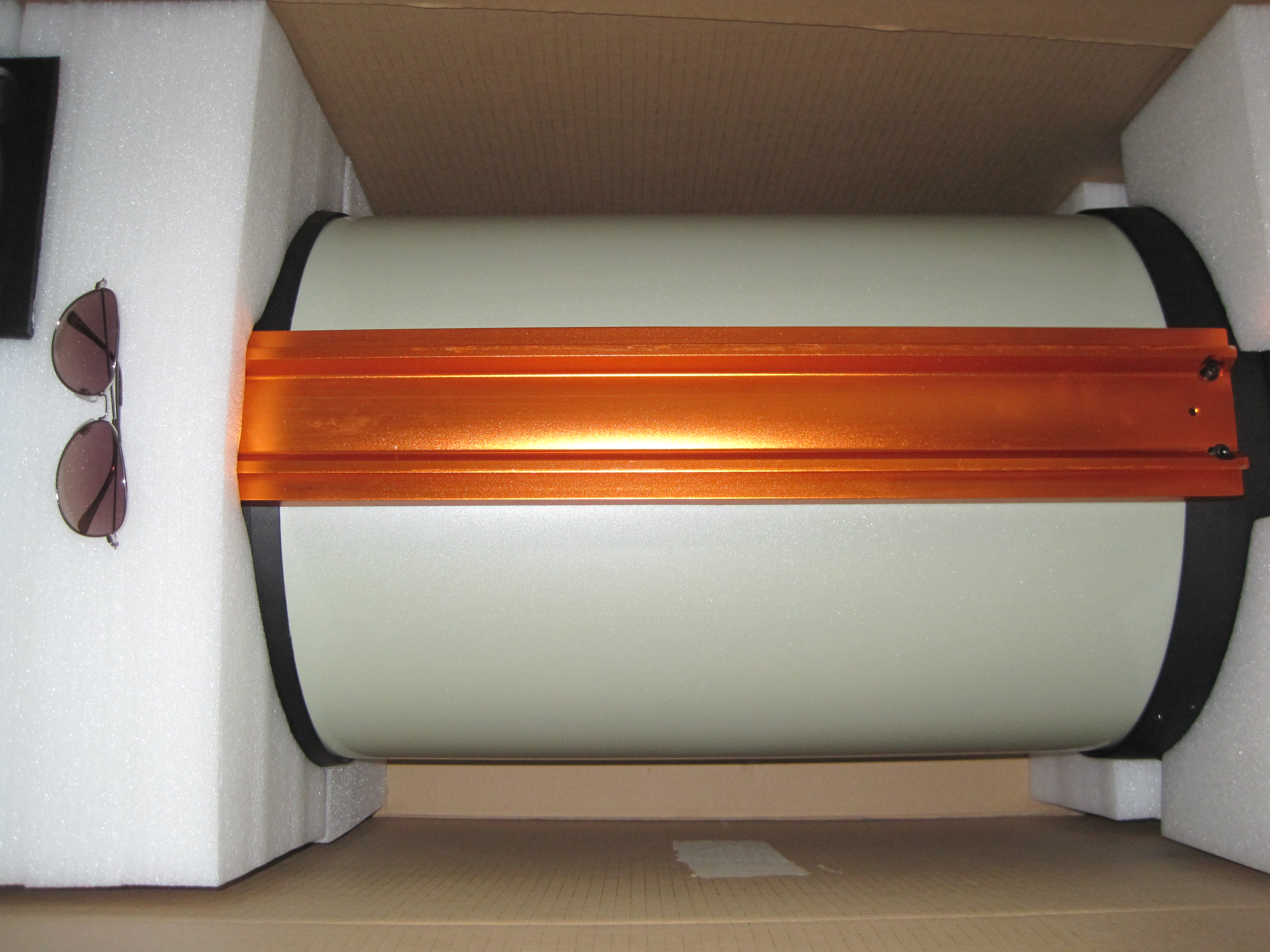
Here it is! (sunglasses for scale).  It’s called a celestron C14 and it’s about as big as you can buy without having people come round and build it for you, unless you are going to build something which is mounted on the floor called a Dobsonian. We want ours to fly around etc so that’s no good. So it comes with the optical tube

IMG_0510

and the complicated motorised mount which is called a German Equatorial Mount

equatorial mount

equatorial mount

I don’t know what’s German about it.  It also comes with a completely useless tripod

tripod

tripod

which is also quite massive.  However, if you look at the top of the tripod you will see the raised cylindrical ring bit that you need to bolt the rest of the telescope onto.  I need to get my people to fabricate something that looks like that to attach to the top of the existing column.  So not much to report, I haven’t tried to get it going yet, haven’t had time…

Here’s what it looks like in the existing dome

Hello, so here is what it looks like out on the roof.  Perhaps it will help you understand why I think it’s such an extraordinary location for a telescope.

Workmen had been using the dome as a place to hide.  I found beer cans and adult interest magazines in there as well as chalk graffiti on the walls.  The worst thing was they had left the hatch open in the rain, so the first thing we did was to secure it and lock it up so it doesn’t deteriorate any more than it already has.  One day I will tell you what history I know about it.

We had Simon from the Widescreen Centre just off Baker St (yes that Baker St) come over and have a look around and he says he’s seen worse so that’s good.  Now we have a Celestron 14″ diameter telescope on order, at least I think we do, I’ve never ordered anything so expensive before so I don’t know if I filled the forms in right.  We’ll see. more photos below

the current mirror :(

the current mirror 😦

the current telescope (been out in rain)

the current telescope (been out in rain)

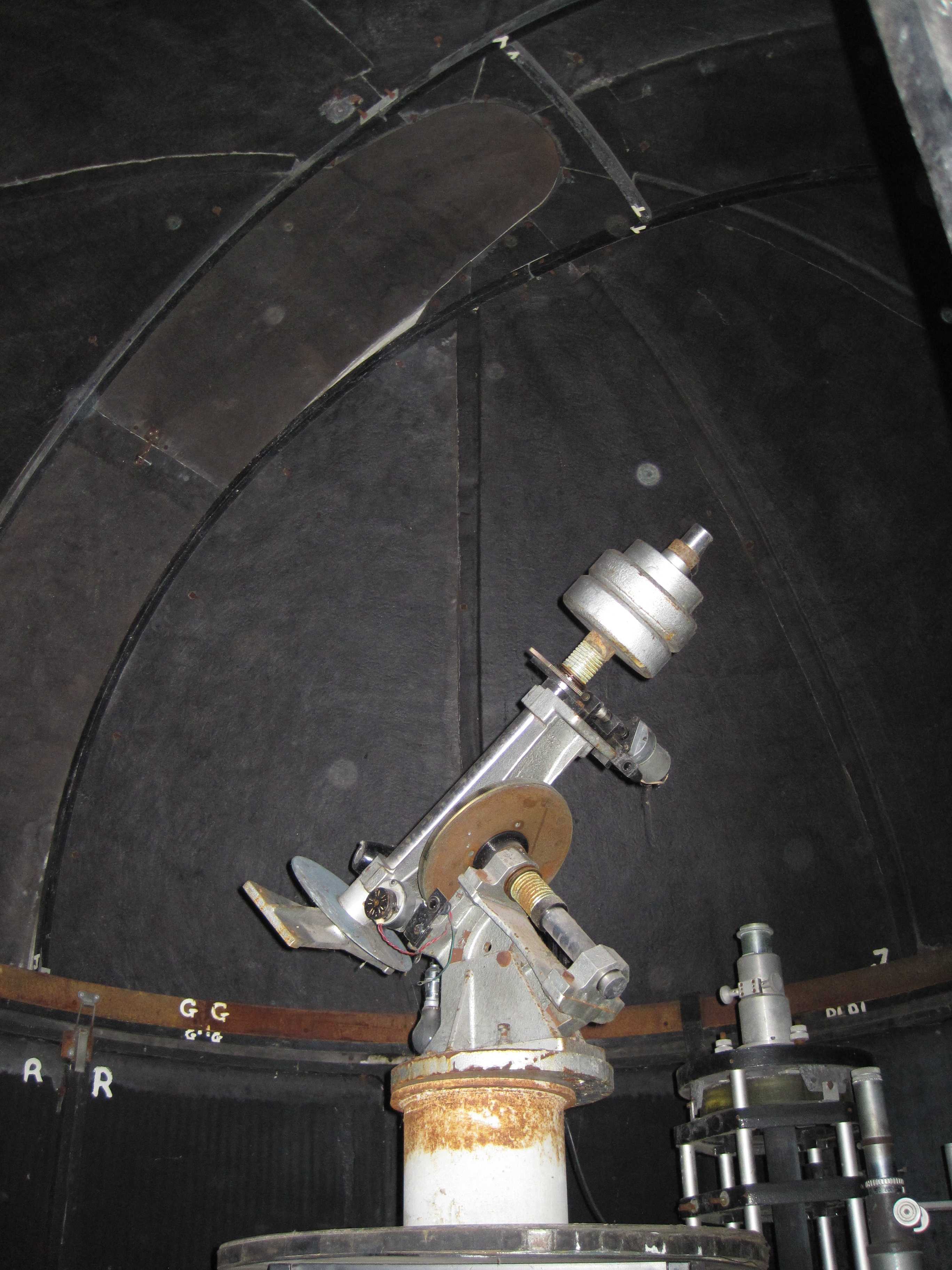
the current mount

the current mount

Testing Einstein’s relativity with the most Energetic Photons in the Universe

Hello, I’m going to get you some pics (and maybe a movie) of inside the telescope when it STOPS RAINING.

Anyway, I said that I would start to tell you about my latest research.  I recently put a new paper on the arXiv called “The CTA Sensitivity to Lorentz-Violating Effects on the Gamma-Ray Horizon” catchy title, yeah?

CTA stands for Cherenkov Telescope Array which is a special kind of telescope which is being designed and having test parts built at the moment which looks for very high energy photons called gamma rays (in increasing photon energy from low to high you have radio waves (urm.. radio), microwaves (cooking), infra red (night vision), red, yellow, green, blue, ultra violet (sunburn), x-rays (dentist), gamma rays (incredible hulk) then you run out of words and have to say “very high energy gamma rays” (VHE gamma rays).  We should probably call them stupo-rays or something.).  There may be higher energy gamma rays that are detected in cosmic ray detectors but you can’t really easily tell if they are photons or something else like protons.  So lets just stick to the story that CTA will detect the highest energy photons in the Universe.

CTA will look like this which I think you will agree doesn’t look much like a normal telescope for optical (red, green, blue etc) photons.  It may be built in Namibia where there is already a really good VHE gamma ray telescope called HESS or it may be built somewhere else and since I’m just an associate member of the collaboration and not a full member I get to avoid politics like that completely. HESS is really good, a great success but CTA will hopefully be even better and detect more and higher energy gamma rays.

Anyway, what is my paper about?  Most photons fly through the Universe and only stop or get scattered if they hit a charged particle like an electron or a proton.  These VHE gamma rays are so energetic they can actually hit other low energy photons, for example the photons that are emitted by stars, so hard that they can annihilate each other into matter and anti-matter, an electron and an anti-electron (positron) to be precise.  So they don’t get very far.  So you shouldn’t see very high energy photons arriving from very distant sources in the Universe.

Thing is, all of this relies upon Einstein’s theory of special relativity being correct at very high energies.  Some theories of quantum gravity may lead to his theory breaking down at high energies so that these VHE gamma rays don’t travel quite at the speed of light any more.  If this is the case then this matter/anti-matter collision business might not work so well, which means that they will be able to get through space after all!  So the signal we are looking for is some distant active galaxy which is pumping out loads of gamma rays.  We detect the lower energy gamma rays, then we see that at higher energies they start to go missing because they don’t arrive to the Milky Way, they hit another photon on the way and turn into electron-positron pairs.  However at REALLY high energies, if Einstein’s theory breaks down, we might start to see them turning up again.  So we would expect to be able to detect lower energy gamma rays (around a TeV), no detection of medium energy gamma rays (around 10 TeV) because they don’t make it through without creating matter and anti-matter but then if Lorentz symmetry is broken (Einstein’s special theory of relativity goes wrong at high energies) we could start to see the very high energy gamma rays turn up after all (around 100 TeV).

So we have estimated how well we will be able to test Einstein’s theory at high energies and it’s not bad, very competitive with some of the best other constraints which exist.  So that’s the kind of thing I do for my day job.  Hopefully the next post will be about the telescope…

“waiting for tomorrow all of my life…”

You may be wondering why there hasn’t been an update yet with regards to the telescope, perhaps you think I am deep in an optical laboratory trying to align a mirror or something. In fact I’m just trying to get a key for the roof from estates so I can go up there without assistance. They were supposed to meet me this morning but that’s been postponed.

There is one update and it is significant, the cash that we won from the KCL teaching fund (thankyou) actually seems to exist and a University account has been set up, so I can start buying stuff soon.

Meanwhile I am trying to finish two papers and get a third started. I will post pictures when that happens (this week? next week?) and I will post about my papers when they come out. In the meantime you can prepare yourself for the photos with these two web-pages…

Watch Out: 15 Eerie Abandoned Observatories


http://io9.com/abandoned-space-observatories-are-monuments-to-science-1479519920

Welcome to the blog

Hello, my name is Malcolm Fairbairn and I am reader in physics at King’s College London. My research lies at the interface between particle physics, astrophysics and cosmology.  In particular I spend my time worrying about the nature of dark matter and dark energy and how we can make links between what is happening at the LHC and in the early Universe.  I am a theorist, which means I don’t do experiments or use telescopes, I make calculations using pencil and paper and also by writing computer programs.

I also teach undergraduates.  This blog is about a telescope we are going to build on the roof of the physics department here at KCL.  We are right in the middle of London, here (look for the little dome next to where it says “dept of electrical and electronic engineering”) so it’s going to be interesting.  Why is it going to be interesting?  Well because people usually build telescopes in dark places like here!  However, our telescope is not for research but for teaching.

This blog will be about the whole process of installing the telescope, getting it to work and then seeing what we can do with it in the most polluted light environment in Western Europe.

I may also post things about my research and about anything else that comes into my mind.  I am of course happy to answer any questions people have about physics, so feel free to contact me via this blog.

So I only found out that I got funding for this project last week, so now I’ve got to go and get my own key for the roof and timetable the first meetings with people.  The problems start here!